

Carmién » News »
What Is Green Rooibos? The Science Behind South Africa’s Most Powerful Botanical
What Is Green Rooibos? The Science Behind South Africa’s Most Powerful Botanical
23 July 2026
Excerpt:
Discover what makes Green Rooibos unique. Learn how specialised processing preserves naturally occurring antioxidants and flavonoids, how Green Rooibos compares with Green Tea, and why Carmién is a trusted supplier of premium South African Green
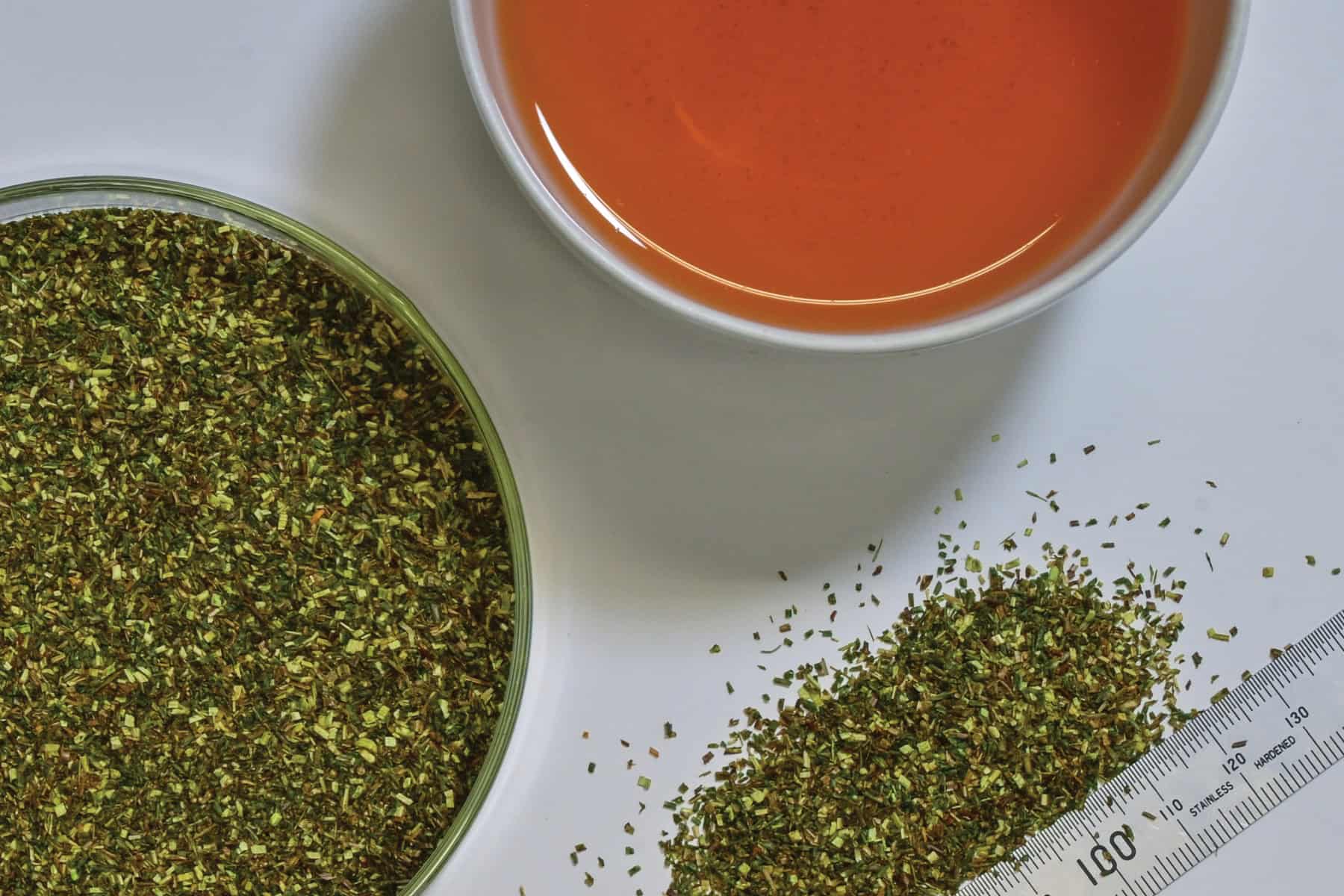
As consumers increasingly seek natural ingredients that deliver both flavour and functionality, Green Rooibos has emerged as one of the most exciting botanical ingredients available today.
Unlike Green Tea, Green Rooibos is naturally caffeine-free, making it an ideal botanical ingredient for products where consumers seek both functionality and balance.
While Rooibos has long been recognised as South Africa’s iconic herbal infusion, Green Rooibos remains relatively undiscovered outside specialist ingredient and tea markets. Produced from the same plant, Aspalathus linearis, Green Rooibos follows a unique processing method that preserves many of the plant’s naturally occurring bioactive compounds, creating a fresh, vibrant flavour profile and making it an increasingly sought-after ingredient for premium teas, functional beverages and botanical applications.
At Carmién, we produce premium Green Rooibos through our vertically integrated supply chain, delivering consistent quality, traceability and ingredient performance to customers around the world.
What Is Green Rooibos?
Green Rooibos comes from the same remarkable plant as traditional Rooibos (Aspalathus linearis), which grows exclusively in the Cederberg region of South Africa. This unique origin has earned Rooibos Protected Designation of Origin (PDO) status, recognising that authentic Rooibos can only be produced within this specific region.
Although Green Rooibos and traditional Rooibos originate from the same plant, the difference lies entirely in the way they are processed after harvesting.
One of the defining characteristics of Rooibos is how rapidly it oxidises once harvested. As soon as the leaves are cut, naturally occurring enzymes begin reacting with oxygen, initiating a series of chemical changes within the plant. For traditional Rooibos, this natural oxidation is carefully encouraged. The leaves are bruised or cut to accelerate the process, developing the characteristic amber-red colour, smooth mouthfeel and naturally sweet flavour profile that has made Rooibos famous around the world.
Green Rooibos follows a different path.
To preserve the plant’s original chemistry, oxidation must be halted as quickly as possible after harvesting. Freshly harvested Rooibos is rapidly stabilised and dried before significant enzymatic activity can occur, helping retain many of the naturally occurring flavonoids and polyphenols that are present in the fresh plant.
The result is an ingredient with distinctive characteristics:
- A fresh, clean and naturally herbaceous flavour
- A pale golden-green infusion
- Naturally caffeine-free
- Naturally low tannin levels
- A rich profile of naturally occurring flavonoids
As a result, Green Rooibos offers an entirely different flavour profile and phytochemical composition to traditional Rooibos, which makes it particularly attractive for functional beverages, botanical extracts and wellness-focused formulations.
The Science Behind Green Rooibos
The growing interest in Green Rooibos stems from its naturally rich composition of polyphenols, particularly a group of compounds known as flavonoids.
Polyphenols are naturally occurring plant compounds that help protect plants against environmental challenges such as ultraviolet radiation, drought, temperature extremes and pests. Within this group, flavonoids play an especially important role in protecting plant tissues from oxidative damage.
In the human diet, flavonoids have attracted considerable scientific interest because of their antioxidant activity. Antioxidants help neutralise free radicals – highly reactive molecules produced naturally during normal metabolism and in response to environmental stress. While oxidative stress is a normal biological process, excessive levels may contribute to cellular damage over time (Joubert et al., 2008).
Because oxidation is halted almost immediately after harvesting, Green Rooibos retains more of these naturally occurring flavonoids than would otherwise remain after traditional oxidation. This gives Green Rooibos its distinctive antioxidant profile while preserving its fresh flavour and vibrant colour.
Aspalathin – The Signature Flavonoid
The compound most closely associated with Green Rooibos is aspalathin.
Aspalathin is exceptionally rare in nature and is found almost exclusively in Aspalathus linearis. It belongs to a specialised group of flavonoids known as C-glucosyl dihydrochalcones, making Rooibos unique among commercially available botanical ingredients.
Aspalathin has become the subject of extensive scientific research because of its potent antioxidant activity and its potential role in supporting healthy glucose metabolism, helping protect cells against oxidative stress and modulating inflammatory pathways. While research continues, it is widely regarded as the defining bioactive compound of Green Rooibos (Joubert & De Beer, 2011).
Because aspalathin is readily transformed during oxidation, preserving the freshly harvested plant material enables Green Rooibos to retain much higher levels of this naturally occurring compound.
More Than Just Aspalathin
Green Rooibos owes its value not to a single compound, but to the synergy between numerous naturally occurring flavonoids.
Nothofagin, another Rooibos-specific compound closely related to aspalathin, contributes to the plant’s antioxidant capacity and is being investigated for its potential anti-inflammatory and cell-protective properties.
Orientin and iso-orientin are flavones recognised for their strong antioxidant activity. Studies suggest they may help protect cells from oxidative damage and have potential applications in cardiovascular and neurological health research.
Vitexin and isovitexin are naturally occurring flavones found in several medicinal plants. They have attracted attention for their antioxidant activity and are being studied for their potential role in supporting normal metabolic and inflammatory processes.
Green Rooibos also contains quercetin derivatives, belonging to one of the best-known families of dietary flavonoids. Quercetin has long been associated with antioxidant activity and is being investigated for its role in supporting normal immune function and helping protect cells from oxidative stress.
Rather than acting independently, these compounds work together to create the broad antioxidant profile that makes Green Rooibos such a compelling botanical ingredient.
Scientific studies consistently demonstrate that Green Rooibos exhibits a distinct antioxidant profile compared with traditional Rooibos, largely because more of the naturally occurring flavonoids are preserved during processing. This antioxidant activity has been demonstrated using recognised analytical methods including ORAC, TEAC and DPPH assays (Joubert et al., 2008; Joubert & De Beer, 2011).
Alongside this unique phytochemical profile, Green Rooibos offers additional formulation advantages. It is naturally caffeine-free, low in tannins and has a clean, refreshing flavour that complements a wide range of fruits, botanicals and functional ingredients.
Green Rooibos vs Green Tea
Green Rooibos is increasingly being compared with Green Tea because both are minimally processed botanical ingredients that retain naturally occurring antioxidants. Despite these similarities, they are fundamentally different plants with distinct phytochemical profiles.
| Green Rooibos | Green Tea |
| Aspalathus linearis | Camellia sinensis |
| Naturally caffeine-free | Naturally contains caffeine |
| Naturally low tannins | Higher tannin content |
| Smooth, mild and slightly herbaceous flavour | Can be more bitter and astringent |
| Rich in aspalathin and Rooibos flavonoids | Rich in catechins, particularly EGCG |
Green Tea is best known for catechins such as epigallocatechin gallate (EGCG), while Green Rooibos is distinguished by its naturally high levels of aspalathin and other unique flavonoids. Rather than being direct substitutes, the two ingredients offer different functional and sensory characteristics.
For manufacturers developing caffeine-free wellness beverages, children’s products, evening drinks or premium botanical blends, Green Rooibos provides an attractive alternative while delivering its own distinctive flavour profile and antioxidant composition.
Unlock the Potential of Green Rooibos with Carmién
As demand for clean-label, plant-based and functional ingredients continues to grow, Green Rooibos is becoming an increasingly valuable botanical for food and beverage manufacturers. Its unique combination of naturally occurring flavonoids, antioxidant activity, smooth flavour profile and complete absence of caffeine allows brands to develop products that meet evolving consumer preferences without compromising on taste or functionality.
Producing premium Green Rooibos, however, requires more than simply preventing oxidation. It demands speed, precision and complete control over the processing journey.
Because Green Rooibos oxidises rapidly after harvesting, preserving its naturally occurring flavonoids depends on stabilising the plant material as quickly as possible. At Carmién, our processing facility is located directly on a Rooibos producer farm, minimising the time between harvesting and processing. This helps preserve the vibrant colour, fresh flavour and phytochemical profile that distinguish high-quality Green Rooibos.
Our vertically integrated supply chain provides complete oversight from cultivation and processing to grading, packing and export, ensuring consistent quality, full traceability and internationally recognised food safety standards. Whether you’re sourcing Green Rooibos for premium tea blends, functional ready-to-drink beverages, botanical extracts, nutraceuticals or customised wellness formulations, our team can recommend the most suitable grade and specification for your application.
As consumer interest in naturally functional botanical ingredients continues to grow, Green Rooibos is well positioned to become an increasingly important ingredient in the global wellness and beverage sectors. Combining a unique phytochemical profile with exceptional versatility and authentic South African provenance, it offers manufacturers a compelling opportunity to differentiate their products in an increasingly competitive marketplace.
Ready to explore the potential of Green Rooibos? Contact the Carmién team to discuss your product development requirements, request technical guidance or arrange a sample of our premium Green Rooibos ingredient range.
Sign up for the Newsletter
Enjoyed this insight? Subscribe to our B2B mailing list for market updates, product innovation, and supply intelligence—delivered straight from origin.
References:
- Beelders, T., Malherbe, C.J., de Beer, D., Joubert, E. & Stander, M.A. (2012) ‘Comprehensive two-dimensional liquid chromatographic analysis of phenolic compounds in Aspalathus linearis (Rooibos)’, Journal of Chromatography A, 1260, pp. 126–137. Available at: https://pubmed.ncbi.nlm.nih.gov/22807363/
- Department of Agriculture, Land Reform and Rural Development (2021) Regulations relating to the Protection of the Name Rooibos/Red Bush as a Protected Designation of Origin (PDO). Pretoria: DALRRD. Available at: https://eur-lex.europa.eu/eli/reg_impl/2021/865/oj/eng
- Joubert, E. (1996) ‘HPLC quantification of the dihydrochalcones, aspalathin and nothofagin in Rooibos tea (Aspalathus linearis) as affected by processing’, Food Chemistry, 55(4), pp. 403–411.
- Joubert, E. & De Beer, D. (2011) ‘Rooibos (Aspalathus linearis) beyond the farm gate: From herbal tea to potential phytopharmaceutical’, South African Journal of Botany, 77(4), pp. 869–886. Available at: https://www.sciencedirect.com/science/article/abs/pii/0308814695001662
- Joubert, E., Gelderblom, W.C.A., Louw, A. & De Beer, D. (2008) ‘South African herbal teas: Aspalathus linearis, Cyclopia spp. and Athrixia phylicoides—A review’, Journal of Ethnopharmacology, 119(3), pp. 376–412. Available at: https://www.sciencedirect.com/science/article/abs/pii/S0378874108003334
- McKay, D.L. & Blumberg, J.B. (2007) ‘A review of the bioactivity and potential health benefits of chamomile tea, green tea and selected herbal infusions’, Phytotherapy Research, 21(6), pp. 519–530.
- Morton, J.F. (1983) ‘Rooibos Tea, Aspalathus linearis, a caffeineless, low-tannin beverage’, Economic Botany, 37(2), pp. 164–173. Available at: https://pubmed.ncbi.nlm.nih.gov/16628544/