

Carmién » News »
From Cederberg Roots to a Global South African Icon: The Story of Rooibos
From Cederberg Roots to a Global South African Icon: The Story of Rooibos
22 September 2026
Excerpt:
Discover the history of Rooibos tea, from its South African origins in the Cederberg to its global journey. Learn about Rooibos history, indigenous knowledge, commercial cultivation and why this uniquely South African tea is recognised
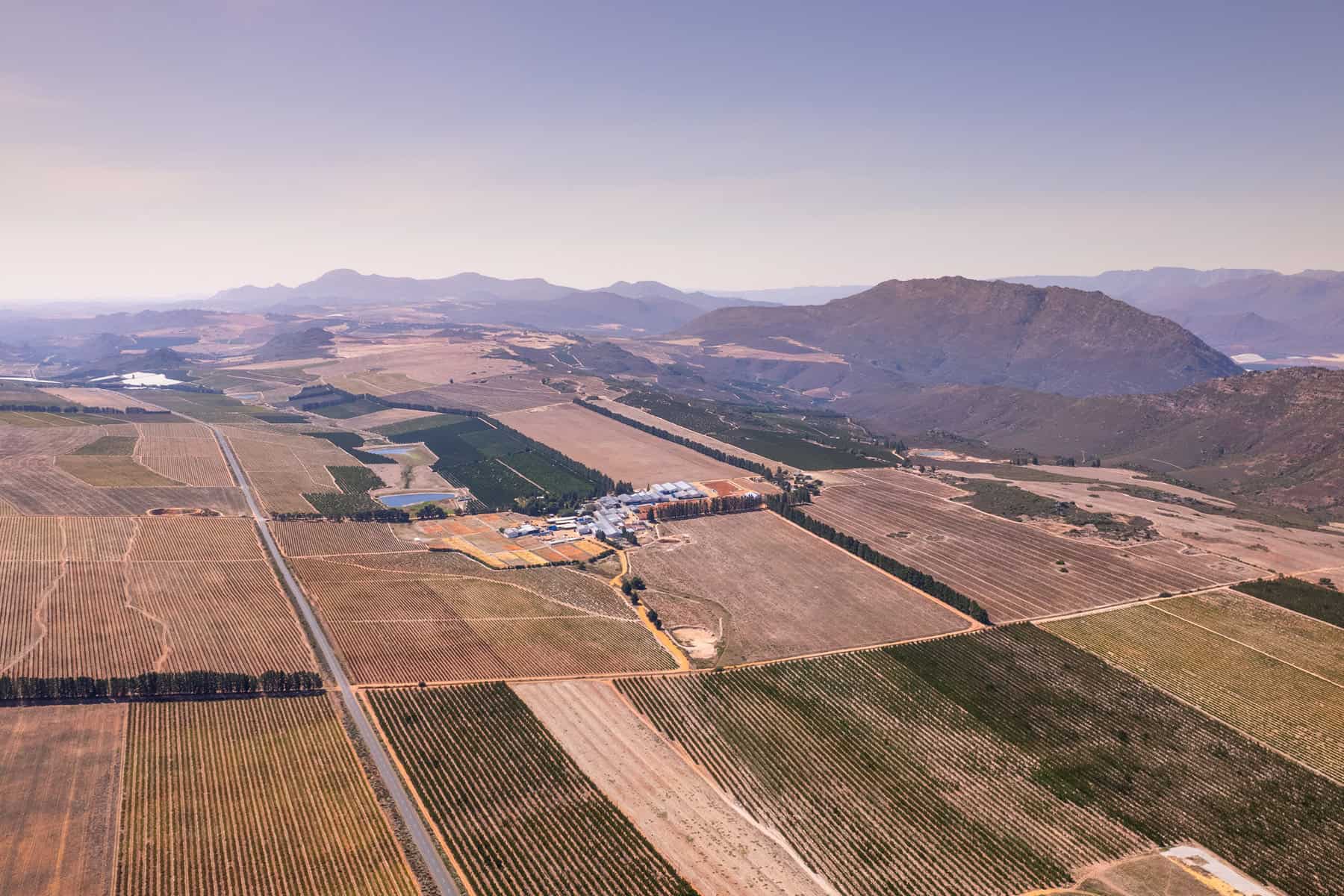
There are few plants that belong so completely to a place.
Rooibos (Aspalathus linearis) grows naturally in a remarkably small part of South Africa, in the rugged mountain landscapes of the Western and Northern Cape. Its home is a place of winter rain, hot dry summers, sandy soils and extraordinary biodiversity: the Cederberg and surrounding Rooibos-growing regions of the Cape Floristic Kingdom.
And yet, from this relatively small corner of the world, Rooibos has travelled remarkably far.
Today, Rooibos is enjoyed in more than 50 countries around the world. It is served in homes, cafés and restaurants, exported as a pure herbal infusion, blended into new products and recognised internationally as a distinctly South African product (South African Rooibos Council, 2024).
But the story of Rooibos did not begin with international trade.
It began here, in the mountains.
A plant rooted in indigenous knowledge
Long before Rooibos became an international commodity, the plant was part of the landscape in which San and Khoi communities lived. Research commissioned by the South African government recognises San and Khoi communities as holders of traditional knowledge associated with Rooibos (Department of Environmental Affairs, 2014).
The relationship between people and Rooibos stretches back long before commercial cultivation. Rooibos was harvested from the wild and prepared locally, becoming part of the knowledge and practices associated with this particular landscape. That connection remains an important part of the story of Rooibos today.
European botanists recorded the plant as early as the eighteenth century. Swedish naturalist Carl Thunberg encountered Rooibos during his travels at the Cape in 1772, while local use of the plant as a beverage continued alongside the growing availability of imported tea (South African Rooibos Council, 2024).
For generations, Rooibos was simply part of life in this part of the world.
It would take another century before its commercial potential began to emerge.
From mountain tea to commercial crop
In 1904, Benjamin Ginsberg, a Russian merchant trading his wares in the Clanwilliam region, began marketing Rooibos as an herbal tea. He recognised that the locally harvested plant had potential beyond the communities in which it was already known and helped establish the beginnings of a commercial Rooibos trade (Joubert and de Beer, 2018).
But there was a problem.
Rooibos was still largely wild harvested, and growing demand was beginning to place pressure on supply. If Rooibos was going to become a sustainable commercial crop, someone needed to work out how to cultivate it reliably.
This is where three names became closely linked to the development of commercial Rooibos cultivation: Benjamin Ginsberg, farmer Olof Bergh and Dr Pieter Le Fras Nortier.
Around 1930, Ginsberg encouraged and persuaded his friends, Nortier (a Clanwilliam doctor and keen naturalist) and Bergh (a respected local farmer) to become involved in developing commercial Rooibos cultivation. Bergh harvested substantial quantities of Rooibos, while Nortier began experimenting with growing the plant from seed (Joubert and de Beer, 2018).
And those seeds were not easy to work with.
Rooibos produces tiny seeds enclosed by an exceptionally hard outer shell. The hard seed coat prevented water from penetrating easily, which meant germination rates were extremely poor. Seeds were scarce and difficult to find in the sandy soil after they had been released from the plant.
Nortier eventually discovered that the seeds needed to be scarified. Their hard outer coating needed to be broken or weakened before planting. His experiments showed that once the seed coat was opened, germination could take place much more successfully. The technique effectively mimicked the natural processes that help Rooibos regenerate in its mountain environment (South African Rooibos Council, 2018).
This breakthrough changed everything.
Rooibos could now be cultivated rather than relying predominantly on wild harvesting. Farmers could establish plantations, production could expand and a commercial industry could begin to take shape.
The little plant from the Cederberg was on its way to becoming a global commodity.
From the Cederberg to more than 50 countries
Over the decades that followed, Rooibos became part of everyday South African life.
It was the tea offered to visitors. The pot brewed in family kitchens. The drink shared around a table. And gradually, it became something that people far beyond South Africa wanted to experience too.
Today, Rooibos is exported to more than 50 countries across the globe. Japan, Germany, the Netherlands, the United Kingdom and France are among the largest importing markets (South African Rooibos Council, 2024).
The scale of that journey is remarkable when you consider where Rooibos comes from.
Rooibos grows naturally in a relatively small geographical area of South Africa. Its production region is tiny compared with the vast global market in which it is now enjoyed. So whether you drink your Rooibos in Cape Town, Tokyo or Timbuktu, there is something extraordinary to remember:
It came from this tiny corner of the world.
That connection to place has become one of Rooibos’s defining characteristics.
A name connected to a place
In 2021, the European Union registered “Rooibos” / “Red Bush” as a Protected Designation of Origin (PDO).
The PDO recognises the geographical connection between Rooibos and its defined South African production area. In other words, the name is protected because the product’s characteristics and reputation are intrinsically linked to its place of origin (European Commission, 2021).
Rooibos therefore joins a very select group of singular products whose names are inseparable from where they come from – products such as Champagne, Madeira wine and Parma Ham.
It is an important recognition.
Rooibos is not simply a herbal infusion that happens to be produced in South Africa. Its identity is rooted in the particular environment in which Aspalathus linearis grows: the climate, the soils, the landscape and the agricultural knowledge that has developed around it.
For a plant that has travelled so far from home, there is something fitting about its origin being formally protected.
Recognising the knowledge behind Rooibos
There is another important chapter in the modern story of Rooibos: the recognition of traditional knowledge through the Rooibos Benefit Sharing Agreement.
As Rooibos developed into a valuable commercial industry, the question of how the San and Khoi communities associated with traditional Rooibos knowledge should benefit from that commercial value became increasingly important.
In 2019, after years of consultation and negotiation, the Rooibos industry and representatives of San and Khoi communities entered into a groundbreadking industry-wide Benefit Sharing Agreement.
The agreement recognises the San and Khoi as holders of traditional knowledge associated with Rooibos. Under the agreement, processors contribute a benefit-sharing levy based on the farm-gate price of Rooibos, with funds directed towards relevant community trusts (Department of Environmental Affairs, 2019; Department of Forestry, Fisheries and the Environment, 2022).
It was an important step in recognising that the story of Rooibos did not begin with commercialisation.
There was knowledge before there was an industry.
And there is responsibility in carrying that knowledge forward.
And now, Rooibos is going to space…
Perhaps the most unexpected chapter in the story is still being written.
In 2026, Rooibos seeds are scheduled to make a journey that would have been unimaginable to the people who first harvested the plant from the Cederberg mountains: a journey to the International Space Station.
The Rooibos in Space programme, conceptualised by the South African Rooibos Council in partnership with MaxIQ Space and supported by the South African National Space Agency (SANSA), will expose Rooibos seeds to microgravity and space radiation for several weeks. Once they return to Earth, the seeds will be compared with control seeds that remained on the ground, with learners from seven Cederberg schools involved in studying germination, growth, resilience and yield (SANSA, 2026; Western Cape Government, 2026).
Why Rooibos?
Part of the answer lies in the plant itself.
Rooibos is remarkably resilient. It has evolved to survive in a harsh environment characterised by hot, dry summers, poor sandy soils and limited rainfall. That natural resilience makes it an interesting candidate for research into how plants respond to extreme environmental stresses.
The space experiment will therefore look not only at whether the seeds germinate, but at how their growth and resilience compare after exposure to conditions very different from those found on Earth.
There is something wonderfully fitting about it.
A plant that evolved to survive the harsh conditions of the Cederberg is being given the opportunity to face an entirely different kind of extreme environment. From mountain fires and dry summers to microgravity and space radiation, Rooibos continues to show us just how much there is still to learn about this extraordinary plant.
Growing with Rooibos
At Carmién, this story feels especially close to home.
Carmién began in 1998 in a small farm shop near Citrusdal, in the foothills of the Cederberg. Founder Mientjie Mouton grew up on a Rooibos-producing farm in the same valley, and Rooibos was already part of the fabric of everyday life long before Carmién became a business.
That sense of connection still shapes who we are today.
Carmién is a family-owned business, and our approach to Rooibos is deliberately close to the source. We source Rooibos from our producer farms and long-term producer partners, process it on-site at Bergendal Rooibos, and develop, blend and pack products from there. Our vertically integrated model gives us traceability from field to final product, while keeping the relationship between the land, the people and what ultimately reaches the customer very tangible.
Bergendal is more than just a processing facility. It is part of the community and part of the story, with farm workers holding a 50% shareholding in the facility.
For us, that matters because Rooibos has never simply been an ingredient.
It is part of our heritage, our landscape and our everyday lives. It is something that has been grown, harvested, prepared and shared across generations. And it is something that continues to evolve without losing its connection to where it began.
From the Cederberg mountains to the first export shipments. From Benjamin Ginsberg and the early commercial pioneers to the farmers who learned to cultivate the crop. From indigenous knowledge to international recognition. From Protected Designation of Origin and benefit sharing to seeds preparing to travel into space.
The story of Rooibos is, in many ways, the story of a very South African idea: something deeply rooted can still reach the world. And something shaped by difficult conditions can find a way to thrive.
Perhaps that is part of what makes Rooibos such an enduring South African icon. Its story is one of resilience and perseverance – of adapting, enduring and continuing to grow against the odds.
It has travelled a long way.
But it has never lost its roots.
Sign up for the Newsletter
Enjoyed this insight? Subscribe to our B2B mailing list for market updates, product innovation, and supply intelligence—delivered straight from origin.
References
- Carmién Tea International (2026) About Carmién Tea. Available at: https://carmientea.com/about-carmien-tea/ (Accessed: 18 September 2026).
- Carmién Tea International (2026) Corporate Social Responsibility. Available at: https://carmientea.com/corporate-social-responsibility/ (Accessed: 18 September 2026).
- Department of Environmental Affairs (2014) Environmental Affairs on study of rooibos and honeybush species in South Africa. Available at: https://www.gov.za/news/media-statements/environmental-affairs-study-rooibos-and-honeybush-species-south-africa-19-may (Accessed: 18 September 2026).
- Department of Environmental Affairs (2019) Minister Barbara Creecy: Launch of Rooibos Traditional Knowledge Industry-Wide Benefit Sharing Agreement. Available at: https://www.gov.za/news/speeches/minister-barbara-creecy-launch-rooibos-traditional-knowledge-industry-wide-benefit (Accessed: 18 September 2026).
- Department of Forestry, Fisheries and the Environment (2022) Payment of benefits from rooibos to San and Khoi communities a milestone for industrywide collaboration. Available at: https://www.dffe.gov.za/Payment-of-benefits-from-rooibos-to-San-and-Khoi-communities-a-milestone-for-industrywide-collaboration (Accessed: 18 September 2026).
- European Commission (2021) Commission Implementing Regulation (EU) 2021/865: “Rooibos”/“Red Bush” (PDO). Available at: https://eur-lex.europa.eu/eli/reg_impl/2021/865/oj/eng (Accessed: 18 September 2026).
- Joubert, E. and de Beer, D. (2018) ‘The commercial history of Cape herbal teas and the analysis of phenolic compounds in historic teas from a depository of 1933’, Journal of Food Composition and Analysis. Available at: https://www.sciencedirect.com/science/article/abs/pii/S0889157518307798 (Accessed: 18 September 2026).
- South African National Space Agency (SANSA) (2026) Rooibos heads to space in groundbreaking South African STEM initiative. Available at: https://www.sansa.org.za/2026/07/rooibos-heads-to-space-in-groundbreaking-south-african-stem-initiative/ (Accessed: 18 September 2026).
- South African Rooibos Council (2018) Rooibos Traditional Knowledge and Benefit Sharing. Available at: https://sarooibos.co.za/wp/wp-content/uploads/2018/10/20180723-SARC-format-TK-Paper-SU-1.pdf (Accessed: 18 September 2026).
- South African Rooibos Council (2024) Industry Statistics. Available at: https://sarooibos.co.za/industry-statistics/ (Accessed: 18 September 2026).
- South African Rooibos Council (2024) Rooibos History. Available at: https://sarooibos.co.za/rooibos-history/ (Accessed: 18 September 2026).
- Western Cape Government (2026) Learners join rooibos space research project. Available at: https://www.westerncape.gov.za/education/learners-join-rooibos-space-research-project (Accessed: 18 September 2026).
- Wynberg, R., Chennells, R., Schroeder, D. et al. (2020) ‘The Rooibos Benefit Sharing Agreement – Breaking New Ground with Respect, Honesty, Fairness, and Care’, Journal of Ethics in Science and Environmental Politics. Available at: https://pmc.ncbi.nlm.nih.gov/articles/PMC7065993/ (Accessed: 18 September 2026).