

Carmién » News »
World Allergy Week: Rooibos and the Science Behind Its Traditional Use for Allergy Relief
World Allergy Week: Rooibos and the Science Behind Its Traditional Use for Allergy Relief
01 July 2026
Excerpt:
Emerging science is revealing how rooibos flavonoids may influence allergic responses — offering beverage, nutraceutical and wellness brands a science-backed, clean-label ingredient with growing market appeal.
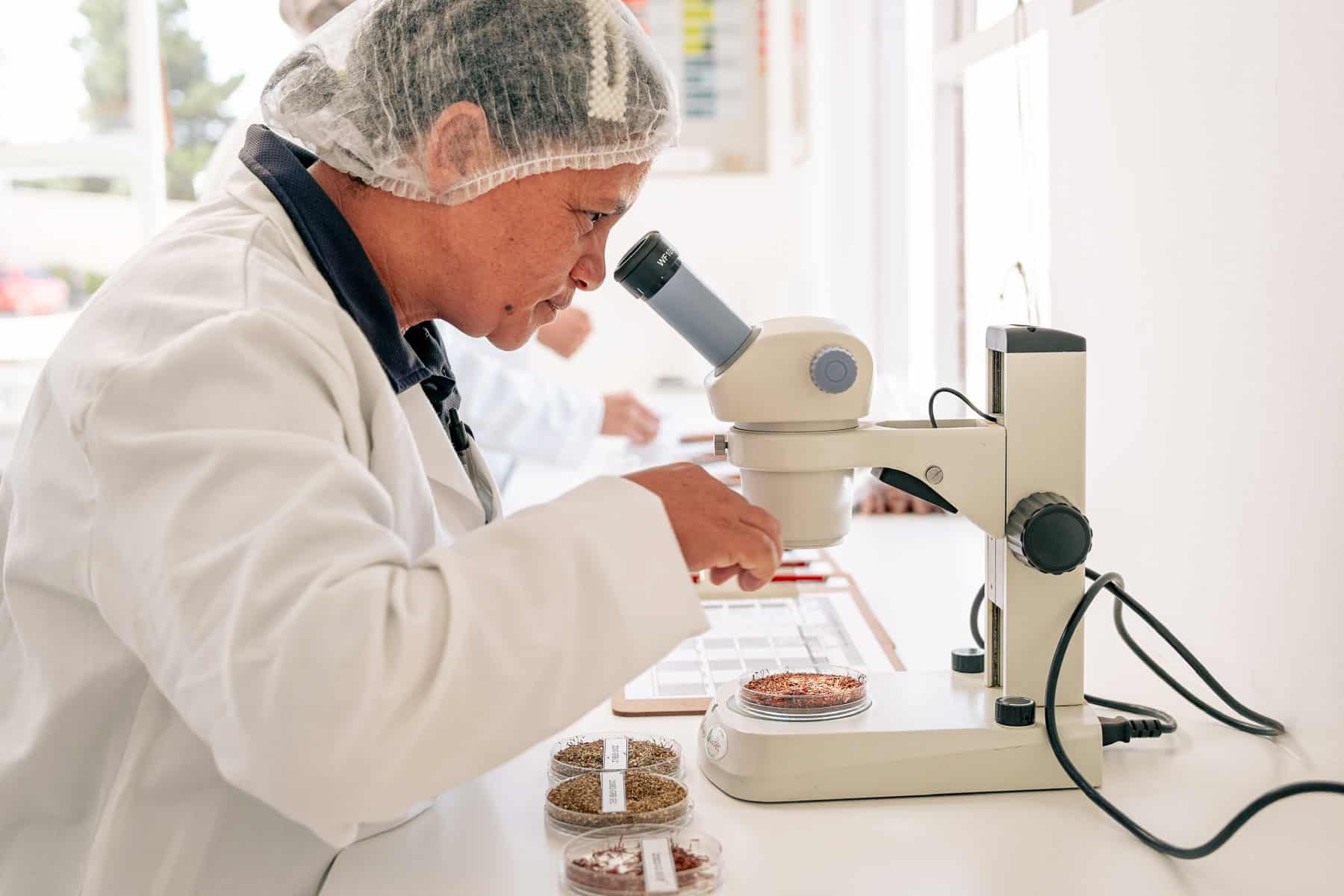
Exploring the Research Behind Rooibos and Allergic Responses
As consumer interest in natural wellness solutions continues to grow, ingredients supported by both traditional use and emerging scientific research are attracting increasing attention. During World Allergy Week, Rooibos offers a particularly compelling story.
For generations, Rooibos has been consumed in South Africa as a natural remedy for allergies, eczema and respiratory discomfort. Today, scientific research is beginning to uncover the biological mechanisms that may help explain these traditional applications, particularly the role of aspalathin, a rare flavonoid found in significant concentrations only in Rooibos (Aspalathus linearis), in modulating allergic responses (Kim et al., 2025).
For beverage manufacturers, nutraceutical developers and wellness brands, this growing body of evidence presents an opportunity to leverage a trusted, consumer-friendly ingredient with a unique scientific narrative. As one of the world’s leading Rooibos producers and innovators, Carmién Tea is uniquely positioned to help brands unlock this potential through premium-quality Rooibos ingredients and product development expertise.
Understanding Allergic Reactions
To understand why researchers are investigating Rooibos, it is helpful to first understand what happens during an allergic reaction.
When a person encounters an allergen, such as pollen, dust mites or pet dander, specialised immune cells known as mast cells become activated. These cells release histamine and other inflammatory compounds that trigger familiar allergy symptoms, including sneezing, itching, watery eyes, congestion and skin irritation (Kim et al., 2025).
Many allergy therapies therefore focus on reducing histamine release, stabilising mast cells or moderating inflammatory pathways. Interestingly, several naturally occurring compounds found in Rooibos appear to influence these same biological mechanisms, making the plant an increasingly important subject of allergy-related research.
Aspalathin: Rooibos’ Signature Bioactive Compound
Among the many compounds found in Rooibos, aspalathin stands apart. This rare flavonoid is found in significant concentrations only in Rooibos (Aspalathus linearis), making it one of the plant’s most distinctive bioactive compounds.
Aspalathin is particularly abundant in Green Rooibos, making it an attractive ingredient for applications where maximising naturally occurring aspalathin is a formulation objective. Fermented (red) Rooibos, meanwhile, offers its own distinctive profile of bioactive polyphenols and remains the format most widely recognised and enjoyed by consumers worldwide (Joubert et al., 2016).
Over the past decade, aspalathin has become the focus of extensive scientific investigation due to its antioxidant, anti-inflammatory and immune-modulating properties (Afrifa et al., 2023). In a 2025 study published in Inflammation, researchers examined the effects of aspalathin on mast cell-mediated allergic inflammation. Their findings revealed that aspalathin significantly reduced mast cell activation, suppressed histamine release and inhibited key inflammatory signalling pathways involved in allergic responses (Kim et al., 2025).
The researchers concluded that aspalathin demonstrated promising activity against mast cell-mediated allergic inflammation, suggesting potential applications in future allergy research (Kim et al., 2025). These findings are particularly significant because mast cell activation lies at the heart of many common allergic reactions.
Rooibos Flavonoids and Histamine Regulation
Aspalathin is not the only bioactive compound attracting scientific attention.
Rooibos naturally contains a diverse range of flavonoids, including quercetin, luteolin, chrysoeriol and nothofagin, several of which have demonstrated anti-allergic activity in laboratory studies (Morishita et al., 2019).
Researchers investigating Rooibos found that these flavonoids were capable of inhibiting mast cell degranulation – the process responsible for releasing histamine and other inflammatory mediators during allergic reactions (Morishita et al., 2019). By reducing the release of these compounds, Rooibos flavonoids may help moderate some of the biological processes associated with allergic responses. Although these findings are currently based primarily on laboratory and pre-clinical research, they provide valuable insight into why Rooibos has traditionally been associated with allergy relief.
This growing body of evidence is contributing to increased interest in Rooibos across the functional beverage, supplement and wellness categories worldwide.
The Role of Quercetin
Among the flavonoids naturally present in Rooibos, quercetin is perhaps the most widely recognised in allergy research.
Numerous studies have shown that quercetin can help stabilise mast cells, inhibit histamine release and regulate inflammatory pathways associated with allergic conditions (Jafarinia et al., 2020). Because of these properties, quercetin is often described in scientific literature as a naturally occurring antihistamine compound. While Rooibos should not be considered a therapeutic source of quercetin, its presence contributes to the broader spectrum of bioactive compounds that make Rooibos such an intriguing subject for allergy-related research (Jafarinia et al., 2020).
Together with aspalathin and other naturally occurring flavonoids, quercetin further strengthens Rooibos’ positioning as a botanical ingredient of growing interest in the global wellness market.
Emerging Research in Eczema and Allergic Skin Conditions
Research into Rooibos’ potential benefits extends beyond seasonal allergies.
Atopic dermatitis, commonly known as eczema, is a chronic inflammatory skin condition frequently associated with allergic immune responses. In recent studies, researchers investigated the effect of aspalathin on immune pathways involved in atopic dermatitis and observed improvements in markers associated with allergic skin inflammation (Yang et al., 2025).
The study found that aspalathin helped regulate immune responses linked to the development and progression of allergic skin conditions, further supporting growing scientific interest in Rooibos’ anti-inflammatory potential (Yang et al., 2025).
Although these findings remain pre-clinical, they add to the expanding body of evidence surrounding Rooibos and immune health, creating exciting opportunities for future product innovation.
From Emerging Science to Product Innovation: Partnering with Carmién Tea
The relationship between Rooibos and allergy relief is no longer based solely on traditional wisdom. Emerging scientific research is beginning to reveal how the unique flavonoids found in Rooibos – particularly aspalathin, quercetin, luteolin, chrysoeriol and nothofagin – may influence biological pathways involved in allergic responses.
While further human clinical studies are needed before definitive health claims can be made, the existing evidence provides a compelling foundation for continued research and growing consumer interest. For beverage, nutraceutical and wellness brands, Rooibos offers a unique opportunity to develop products that combine natural heritage, scientific credibility and clean-label appeal.
For manufacturers, however, success depends on more than simply sourcing Rooibos. It requires a partner with the expertise, quality systems and innovation capabilities to consistently deliver premium ingredients that meet evolving consumer expectations. At Carmién Tea, we combine generations of Rooibos expertise with a vertically integrated supply chain, sustainable farming partnerships and advanced manufacturing capabilities. Our ingredient portfolio includes conventional and organic Rooibos and Green Rooibos in various formats for beverage, food and nutraceutical applications.
Beyond supplying ingredients, we work alongside our customers to support formulation, product development and innovation, helping transform emerging science into commercially successful products.
As Allergy Awareness Week highlights the growing impact of allergic conditions worldwide, Rooibos stands out as a uniquely South African botanical with a powerful story – one rooted in tradition, supported by science and increasingly relevant to today’s health-conscious consumers.
Carmién Tea is proud to help global brands bring that story to life.
Sign up for the Newsletter
Enjoyed this insight? Subscribe to our B2B mailing list for market updates, product innovation, and supply intelligence—delivered straight from origin.
References
- Afrifa, D., Engelbrecht, L., Op’t Eijnde, B. and Terblanche, E. (2023) ‘The health benefits of Rooibos tea in humans (Aspalathus linearis): A scoping review’, Journal of Public Health in Africa, 14(12). Available at: https://pubmed.ncbi.nlm.nih.gov/38204815/
- Jafarinia, M., Hosseini, M.S., Kasiri, N., Fazel, N., Fathi, F., Ganjalikhani Hakemi, M. and Eskandari, N. (2020) ‘Quercetin with the potential effect on allergic diseases’, Allergy, Asthma & Clinical Immunology, 16, 36. Available at: https://www.sciencedirect.com/science/article/pii/S1756464624001543
- Joubert, E., de Beer, D. and Manley, M. (2016) ‘Rooibos (Aspalathus linearis) beyond the farm gate: From herbal tea to potential phytopharmaceutical’, South African Journal of Botany, 110, pp. 1–14. Available at: https://scholar.sun.ac.za/items/409307e8-d3c8-495c-ac68-bdaedb7a1836
- Kim, Y., Lee, S., Jin, M., Choi, Y.A., Choi, J.K., Kwon, T.K., Khang, D. and Kim, S.H. (2025) ‘Aspalathin, a primary Rooibos flavonoid, alleviates mast cell-mediated allergic inflammation by inhibition of the FcεRI signalling pathway’, Inflammation, 48(1), pp. 199–211. Available at: https://www.researchgate.net/publication/380815699_Aspalathin_a_Primary_Rooibos_Flavonoid_Alleviates_Mast_Cell-Mediated_Allergic_Inflammation_by_the_Inhibition_of_FceRI_Signaling_Pathway
- Morishita, K., Matsumoto, T., Nakamura, Y. et al. (2019) ‘Identification of degranulation inhibitors from Rooibos (Aspalathus linearis) tea’, Natural Product Research, 33(10), pp. 1472–1476. Available at: https://pmc.ncbi.nlm.nih.gov/articles/PMC6273468/
- Yang, I., Jeong, N.H., Choi, Y.A., Choi, D.K., Lee, H.S., Kwon, T.K., Lee, S. and Kim, S.H. (2025) ‘Aspalathin, a key flavonoid in Rooibos, restores STAT6-mediated immune dysregulation in atopic dermatitis’, International Immunopharmacology. Available at: https://pubmed.ncbi.nlm.nih.gov/39970731/