
News from the Farm: Rooibos Harvest Outlook 2027
05 November 2026
Excerpt:
A preliminary 2027 South African Rooibos harvest outlook, exploring 2026 growing challenges, changing rainfall patterns, seedling establishment and how producers are preparing for the season ahead.
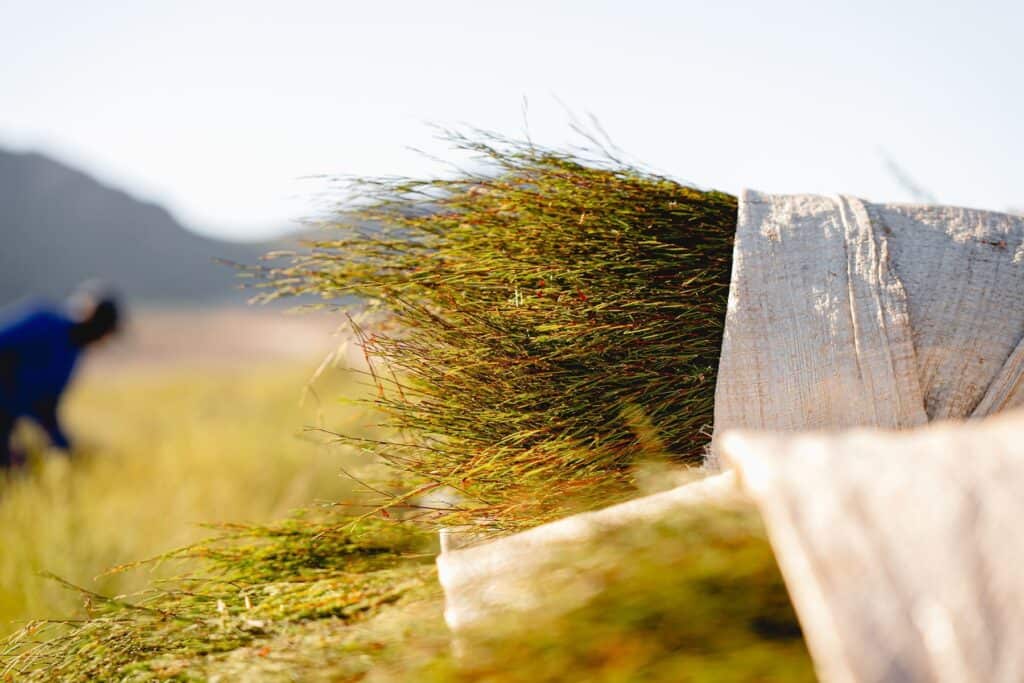
As another Rooibos harvest approaches in South Africa’s Cederberg region, there is renewed hope across parts of the growing region. Welcome rainfall has brought fresh encouragement for planting activities, while producers continue preparing for the season ahead. At Carmién, we look back on a year of challenges and progress, and the work underway to support the future of Rooibos.
There is something special about standing in a Rooibos field and looking towards the season ahead. Every bush tells a story of the land, the weather and the people who have cared for it. And every harvest reminds us that good Rooibos takes patience, knowledge and a little faith in nature.
As 2026 draws towards a close, we have plenty to reflect on. While the year brought difficult growing conditions for Rooibos producers, it also highlighted the knowledge and dedication of the farming community. From caring for established fields to preparing the next generation of Rooibos bushes, the task of safeguarding a sustainable future for the industry continues.
At Carmién, our close connection to the land gives us a valuable understanding of the conditions that shape every harvest. Through our vertically integrated operations, from farming and sourcing to processing and packing, we remain closely involved in the Rooibos journey. This connection, together with our commitment to responsible environmental practices, helps us understand changing conditions, plan ahead and make informed decisions that support the long-term future of Rooibos.
From our farm in the Cederberg to our customers across the globe, this is the story of the year behind us and the harvest ahead.
A Season of Renewed Hope
September brought welcome rainfall to parts of the Rooibos-growing region, allowing planting activities to partially resume after a difficult start to the season.
Industry reporting following the Rooibos Tea Producers Association’s September 2026 meeting highlighted the positive impact of the rainfall on planting prospects and the potential for renewed growth in established fields (Swart, 2026).
This is encouraging news, although the full benefit will depend on whether the region receives further rainfall over the coming summer months. While the Rooibos-growing region is predominantly a winter rainfall area, occasional summer thunderstorms can provide a welcome boost to soil moisture and plant growth.
For producers, these showers can support the development of established bushes and provide favourable conditions for young seedlings to establish themselves. However, their benefit depends on the timing, distribution and consistency of the rainfall. Summer showers are not a substitute for the region’s normal winter rainfall, but they can make a valuable contribution to crop development ahead of the harvest.
At Carmién, we welcome these positive developments while remaining mindful of the conditions still to come. The season is unfolding, and rainfall patterns continue to be an important factor in determining how the crop develops across the growing region.
A good harvest begins long before the first branch is cut. It takes preparation, knowledge of the land and the ability to adapt as conditions change.
Looking Back: The Challenges of the 2026 Growing Season
The 2026 Rooibos harvest brought its share of challenges.
Rooibos is a remarkably resilient plant, naturally adapted to the dry summers and winter rainfall of South Africa’s Western and Northern Cape. But even a plant suited to its environment needs the right conditions to thrive.
Difficult growing conditions leading into the 2026 harvest placed many Rooibos bushes under stress. Prolonged dry spells and high temperatures can affect crop development, highlighting the sensitivity of Rooibos production to changing climatic conditions. Research by Dzikiti et al. (2022) examines these relationships in the context of rain-fed Rooibos production under changing Mediterranean climatic conditions.
The challenges continued into winter, when rainfall stopped earlier than usual across parts of the production region. This disrupted the normal planting window, leaving many young Rooibos seedlings in nurseries while producers waited for sufficient soil moisture.
The consequences extend beyond a delayed planting season. Poor seedling establishment can affect future production for years to come. Rooibos plants take approximately two years to reach full production, meaning that gaps in successful planting today can translate into reduced production capacity in subsequent harvests. Our article on building the next Rooibos crop explores the care and planning involved in this process.
For the farming community, this is a reminder that farming is never simply a matter of following a schedule. It means watching the land, understanding the conditions and being ready to adapt.
The 2027 Rooibos Harvest: What Lies Ahead?
As we look towards the 2027 Rooibos harvest, there are encouraging signs, although the season ahead will require careful monitoring.
Climate forecasts for the 2026/27 summer season point to an increased risk of warmer-than-normal conditions and below-normal rainfall across parts of South Africa, with the developing El Niño event adding to concerns about the season ahead (South African Government, 2026; SADC, 2026). For more on what this could mean for the crop, read our article on what a potential strong El Niño could mean for South Africa’s Rooibos crop.
These forecasts reinforce the importance of preparation and adaptability across the Rooibos industry.
Rooibos is predominantly a rain-fed crop, adapted to the distinctive Mediterranean climate of its growing region. Although the plant is suited to dry conditions, prolonged heat and insufficient moisture can affect plant health, growth and yields (Dzikiti et al., 2022).
At the same time, the return of rainfall offers reason for cautious optimism. The season is still developing, and the eventual harvest will depend on conditions over the coming months. It is too early to treat the 2027 crop outlook as settled. The picture will become clearer as rainfall patterns develop and producers assess the condition of their fields.
For Rooibos buyers, the important takeaway is to avoid assumptions about either a dramatic recovery or a decline. Agricultural uncertainty remains, making early planning and open communication increasingly valuable. Our Rooibos supply outlook for 2026 and latest market insights offer further context for buyers navigating a changing market.
Growing Goodness: Land, People and Rooibos
Building a sustainable Rooibos supply starts long before harvest. From seed collection and nursery development to planting and nurturing young bushes, every step requires care and planning. With Rooibos taking approximately two years to reach full production, successful establishment is important for future supply.
At Carmién, our connection to the land and vertically integrated operations give us valuable insight into the conditions that shape production. Protecting soil health, managing water responsibly and supporting biodiversity are central to our commitment to responsible production. Together with our network of producers and reserve stock, this allows us to plan ahead and support supply continuity.
But caring for Rooibos is also about people. Every harvest brings together producers, farm workers and their families, whose knowledge and dedication sustain the industry. The harvest season also creates important employment opportunities in the region, providing seasonal work and valuable income for local families.
Looking Ahead: Planning for the Year Ahead
The challenges of 2026 have reinforced the importance of looking ahead. While weather conditions and agricultural uncertainty are beyond our control, careful planning can help mitigate risks and support greater continuity across the Rooibos supply chain.
At Carmién, our close involvement in farming, sourcing, processing and packing gives us valuable insight into the factors that influence supply. Combined with our producer network and reserve stock, this allows us to plan production and procurement with the longer term in mind.
Customer forecasts play an equally important role. By understanding anticipated requirements early, we can better align sourcing, production capacity and stock availability with expected demand. This is particularly important as we plan around the upcoming harvest and the changing conditions that may affect supply.
As you look towards your purchasing requirements for the year ahead, we encourage you to share your forecasts with us. Early visibility helps us plan more effectively, anticipate potential challenges and work together to support your supply needs.
At Carmién, we believe that reliable supply is built through preparation, open communication and strong partnerships. We look forward to planning the year ahead with you.
From our family to yours, thank you for being part of the Carmién Rooibos journey.
References:
- Dzikiti, S., Lotter, D., Mpandeli, S. & Nhamo, L. (2022) ‘Assessing the energy and water balance dynamics of rain-fed rooibos tea crops (Aspalathus linearis) under changing Mediterranean climatic conditions’, Agricultural Water Management, 274, article 107944. Available at: https://doi.org/10.1016/j.agwat.2022.107944
- Farmer’s Weekly (2026) ‘Rooibos growers upbeat as rain revives planting hopes’, 19 September. Available at: https://www.farmersweekly.co.za/agri-news/south-africa/rooibos-growers-upbeat-as-rain-revives-planting-hopes/
- South African Government (2026) ‘Agriculture on El Niño weather climate’, 2 September. Available at: https://www.gov.za/news/media-statements/agriculture-el-nino-weather-climate-02-sep-2026
- South African Rooibos Council (2026) ‘As exports grow, Rooibos maintains course amid climate and trade pressures’. Available at: https://sarooibos.co.za/as-exports-grow-rooibos-maintains-course-amid-climate-and-trade-pressures/
- Southern African Development Community (SADC) (2026) ‘Statement from the Thirty-Third Southern Africa Regional Climate Outlook Forum (SARCOF-33)’, 28 August. Available at: https://csc.sadc.int/statement-thirty-third-southern-africa-regional-climate-outlook-forum-sarcof-33