
International Men’s Health Week: What Men’s Health Trends Can Teach Buyers About the Future of Tea
11 June 2026
Excerpt:
This International Men's Health Week , we look at how evolving wellness priorities are creating new opportunities for tea buyers. Discover how men's health trends are shaping Rooibos innovation, category strategy and functional tea development.
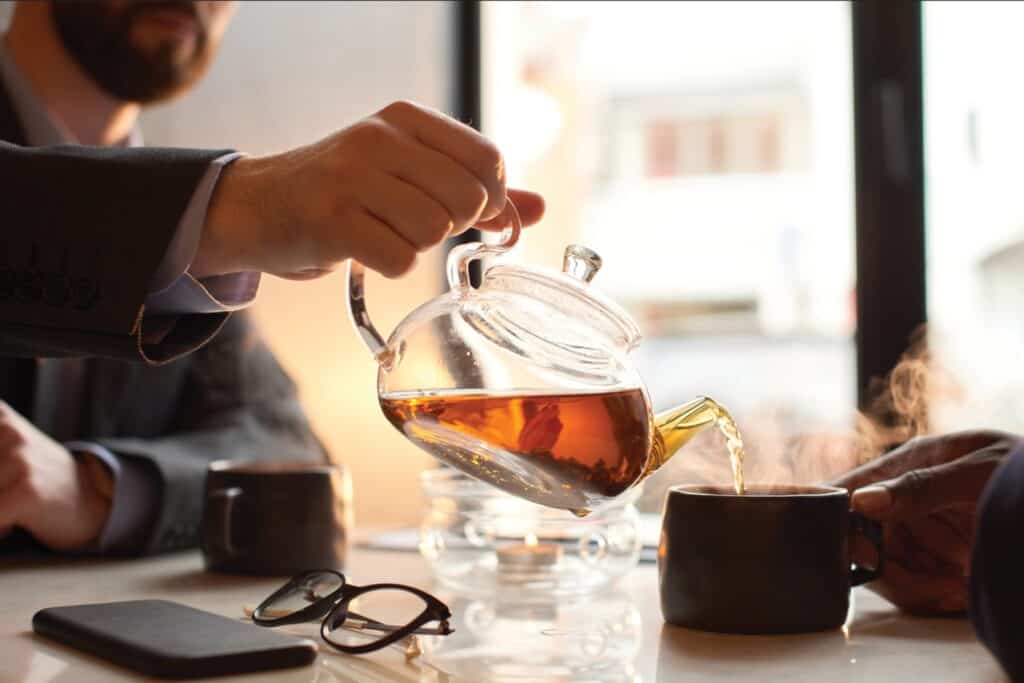
This International Men’s Health Week, conversations around men’s wellbeing are offering valuable insights into broader shifts taking place across the food and beverage industry.
While discussions around men’s health often focus on topics such as mental wellbeing, healthy ageing, stress management and preventative health, the implications extend far beyond a single consumer demographic. For tea buyers, category managers and product developers, these trends provide a useful lens through which to understand how consumer expectations are evolving, and what that may mean for the future direction of tea.
The real opportunity is not simply that consumers are becoming more health conscious. It is that changing wellness priorities are creating entirely new consumption occasions, influencing category development and reshaping what consumers expect from their beverage choices.
Tea Is Expanding Beyond Traditional Consumption Occasions
For many years, tea categories were largely built around familiar occasions: a morning hot beverage, an afternoon break, or an evening cup before bed. While those occasions remain important, today’s consumers increasingly view beverages through the lens of wellbeing outcomes rather than product categories.
As men’s wellness conversations evolve, several themes continue to emerge: managing stress, maintaining focus, supporting healthy lifestyles and building sustainable daily habits. These needs are creating demand for products that fit naturally into everyday wellness routines (McKinsey & Company, 2024).
This trend is particularly relevant to Rooibos. As consumers seek products that support relaxation, balanced energy and healthier lifestyles, Rooibos offers a naturally caffeine-free option that can be enjoyed throughout the day. Whether consumed as part of a morning wellness ritual, an afternoon moment of focus or an evening wind-down routine, Rooibos aligns naturally with many of the emerging consumption occasions being driven by wellness trends.
For category managers, this shift represents a significant opportunity. Future growth may come less from driving additional tea consumption within traditional occasions and more from capturing emerging wellness-led occasions throughout the day.
Wellness Trends Are Creating New Assortment Opportunities
One of the most important lessons buyers can take from men’s wellness trends is that consumers increasingly shop by need state rather than beverage type. According to McKinsey’s Future of Wellness research, consumers are placing greater emphasis on products that support specific health and wellbeing objectives, with younger consumers in particular seeking products aligned with their individual wellness goals (McKinsey & Company, 2024).
Consumers are no longer simply choosing between black tea, green tea or herbal tea. Instead, they are increasingly looking for products that align with a desired outcome. Relaxation, focus, balance, healthy ageing and overall wellbeing are becoming important purchase drivers across multiple beverage categories (Global Wellness Institute, 2025).
This has important implications for assortment planning. Traditional category structures based primarily on tea format or flavour may no longer fully reflect how consumers shop. Instead, there is growing opportunity to build ranges around wellness occasions and functional benefits.
For Rooibos, this presents a particularly compelling opportunity. Its versatility allows it to support a wide range of consumer need states, from relaxation and digestion to focus, active lifestyles and everyday wellness. As wellness-driven purchasing behaviour continues to evolve, Rooibos provides buyers with a flexible platform around which to build more relevant and consumer-centric assortments.
Functional Innovation Continues to Move Up the Agenda
The growing focus on men’s wellness also highlights the increasing importance of functionality within beverages. Consumers are showing greater interest in products that deliver more than refreshment alone. They are seeking products that align with broader wellness goals while remaining simple, natural and easy to incorporate into daily life. This trend is contributing to continued growth within the global functional beverage market (Grand View Research, 2025).
For tea brands and private label developers, this creates opportunities to explore innovation through botanical ingredients, wellness-led formulations and purpose-driven product development. Importantly, successful innovation increasingly starts with consumer needs rather than ingredients.
This is where Rooibos offers a significant advantage. Its naturally smooth flavour profile pairs well with a wide range of botanicals and functional ingredients, allowing brands to develop products tailored to specific consumer occasions without compromising taste. Whether the objective is relaxation, focus, digestion, immunity support or active lifestyle positioning, Rooibos provides a highly adaptable foundation for innovation.
As wellness continues to influence purchasing decisions, Rooibos is increasingly positioned not only as a traditional herbal tea, but as a versatile ingredient within the broader functional beverage category.
Natural Wellness Remains a Competitive Advantage
Another notable takeaway from men’s health trends is the growing preference for natural wellness solutions. Research across health and wellness markets consistently shows increasing demand for clean-label products, plant-based ingredients and natural formulations that consumers perceive as authentic and trustworthy (Research and Markets, 2025).
This trend aligns particularly well with Rooibos. Naturally caffeine-free and rich in naturally occurring polyphenols, Rooibos appeals to consumers seeking simpler, more natural approaches to wellbeing (Joubert & De Beer, 2011). Its strong connection to origin, minimal processing requirements and long-standing heritage further support consumer demand for authenticity and transparency.
Unlike many wellness products that require consumers to adopt entirely new habits or routines, Rooibos integrates seamlessly into existing daily behaviours. This provides a significant advantage as consumers increasingly seek wellness solutions that are both accessible and sustainable over the long term. For buyers, this reinforces the value of products that can credibly connect wellness positioning with natural ingredients and authentic consumer experiences.
What Does This Mean for Tea Buyers?
This International Men’s Health Week, the key takeaway for tea buyers is not that men’s health represents a niche category opportunity. Rather, it highlights broader shifts that are influencing purchasing behaviour across the beverage sector.
Consumers are increasingly seeking products that fit into daily wellness routines, support specific lifestyle goals and offer clear relevance beyond traditional beverage occasions. This is creating opportunities to rethink category strategy, product positioning and innovation pipelines.
For retailers, this may mean reassessing assortment strategies through the lens of wellness occasions rather than conventional tea segmentation. For product developers, it may mean starting innovation discussions with consumer needs rather than ingredients. For brands, it may require communicating benefits and usage occasions more clearly to consumers seeking wellness-led solutions.
Rooibos is particularly well-positioned to support this transition. Its versatility, natural wellness credentials and compatibility with functional botanicals allow it to address a wide range of emerging wellness occasions. For buyers looking to respond to these trends, supplier capability is becoming increasingly important.
At Carmién, we have focused extensively on developing wellness-led Rooibos concepts aligned with evolving consumer needs. Today, our portfolio includes one of the industry’s broadest ranges of functional Rooibos blends, spanning relaxation, focus, digestion, immunity support, active lifestyles and everyday wellness. Combined with private label development expertise, direct access to origin, certified quality systems and long-term supply continuity, this enables us to support retailers and brands looking to build wellness-led tea ranges with confidence.
Looking Ahead
International Men’s Health Week serves as a timely reminder that wellness is becoming increasingly proactive, personalised and preventative.
For buyers looking to capitalise on wellness-driven growth, supplier capability matters. Carmién offers one of the market’s broadest ranges of functional Rooibos blends, spanning relaxation, focus, digestion, immunity and everyday wellness. Combined with private label expertise, direct access to origin, certified quality systems and reliable supply continuity, Carmién provides a trusted partner for brands and retailers seeking to build relevant, wellness-led tea ranges.
References
- Global Wellness Institute, 2025. The Global Wellness Economy Monitor 2025. Miami: Global Wellness Institute.
- Grand View Research, 2025. Functional Beverages Market Size, Share & Trends Analysis Report, 2025–2030. San Francisco: Grand View Research.
- Joubert, E. & De Beer, D., 2011. Rooibos (Aspalathus linearis) beyond the farm gate: From herbal tea to potential phytopharmaceutical. South African Journal of Botany, 77(4), pp. 869–886.
- McKinsey & Company, 2024. The Trends Defining the $1.8 Trillion Global Wellness Market in 2024. Available at: https://www.mckinsey.com/industries/consumer-packaged-goods/our-insights/the-trends-defining-the-1-point-8-trillion-dollar-global-wellness-market-in-2024 (Accessed: 5 June 2026).
- Research and Markets, 2025. Men’s Health and Wellness Market Analysis, By Product Type, By Region and Forecasts, 2025–2030. Dublin: Research and Markets.