
Honeybush: A Complete Product Profile
29 July 2026
Excerpt:
Honeybush is a naturally caffeine-free South African botanical with growing global appeal. Discover its origin, flavour profile, processing, applications and sourcing considerations in this comprehensive guide for tea brands, beverage manufacturers and ingredient buyers.
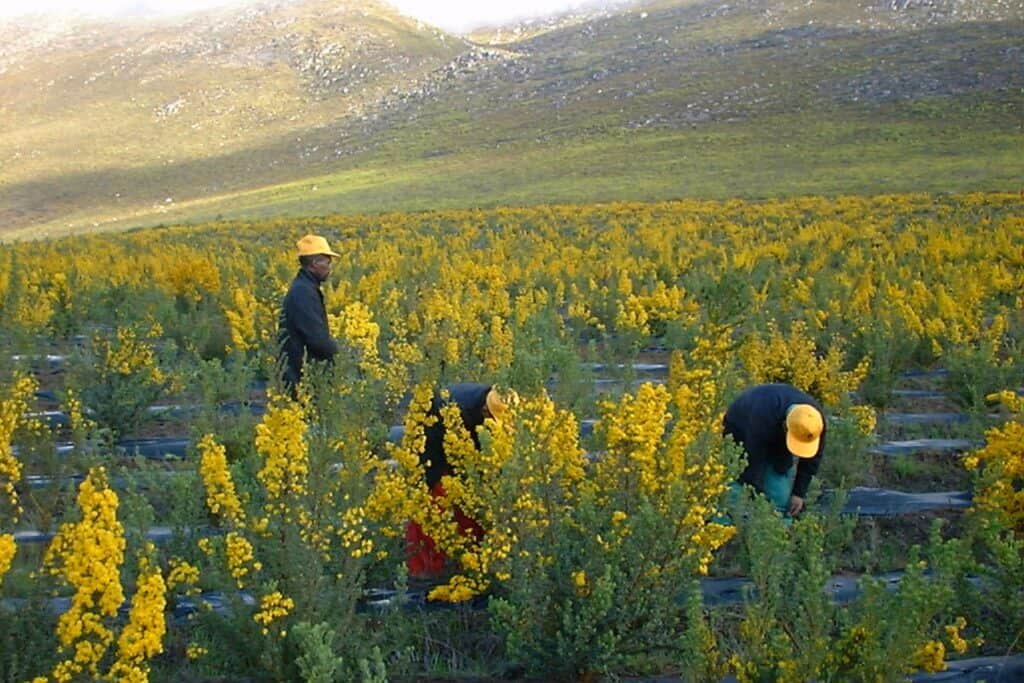
As demand grows for natural botanical ingredients, caffeine-free herbal infusions and clean-label beverage solutions, Honeybush is emerging as a valuable ingredient for tea brands, beverage manufacturers and product developers worldwide. Once considered a niche South African herbal tea, Honeybush is now finding its place in premium tea blends, ready-to-drink beverages, functional wellness products and botanical extracts.
Its appeal extends beyond its naturally sweet flavour. Honeybush offers an authentic origin story, exceptional versatility and a sensory profile that aligns with evolving consumer preferences for natural, minimally processed ingredients.
This comprehensive product profile explores everything buyers, product developers and procurement professionals need to know about Honeybush – from its botanical origins and production to its sensory characteristics, commercial applications and sourcing considerations.
What is Honeybush?
Honeybush is a naturally caffeine-free herbal infusion produced from several species within the genus Cyclopia, a group of flowering shrubs belonging to the Fabaceae (legume) family (Joubert et al., 2011). More than 20 Cyclopia species occur naturally in South Africa, although only a handful are used commercially. Species such as Cyclopia intermedia, C. subternata and C. genistoides are commonly selected and blended to achieve a consistent flavour profile, aroma and appearance (Joubert et al., 2011; Kokotkiewicz & Łuczkiewicz, 2009).
The name Honeybush comes from the sweet, honey-like fragrance released by the plant’s bright yellow flowers during flowering and, despite its name, Honeybush contains no honey. Instead, its naturally sweet, floral flavour profile has made it one of South Africa’s most distinctive indigenous botanicals.
Today, Honeybush is enjoyed in more than 40 countries and continues to gain recognition as a premium botanical ingredient for beverages, food products and wellness applications.
Origin
Honeybush is endemic to South Africa, meaning it grows naturally nowhere else in the world. It is indigenous to the Cape Floristic Region, one of the world’s six floral kingdoms and a UNESCO World Heritage Site recognised for its exceptional biodiversity (UNESCO, 2024).
The various Cyclopia species occur across the mountainous regions of the Western and Eastern Cape, including the Cederberg, Langeberg, Outeniqua, Tsitsikamma and Kouga mountain ranges (Joubert et al., 2011). These areas provide the Mediterranean climate, nutrient-poor sandy soils, winter rainfall and abundant sunshine required for healthy plant growth.
Historically, Honeybush was harvested exclusively from wild populations. As international demand has increased, commercial cultivation has expanded to complement responsibly managed wild harvesting, helping ensure long-term sustainability while protecting South Africa’s unique fynbos ecosystem.
Sensory Profile
Honeybush is prized for its approachable sensory profile, making it particularly attractive to consumers seeking naturally caffeine-free alternatives.
Its aroma is characterised by floral notes with a distinctive honey-like sweetness, often accompanied by hints of apricot, ripe fruit and gentle caramel. The flavour is smooth, rounded and naturally sweet, with very little bitterness or astringency due to its relatively low tannin content. This natural sweetness can help beverage manufacturers reduce added sugar while maintaining an appealing flavour profile.
When brewed, Honeybush produces a bright golden-orange to warm apricot-orange liquor with a clean, smooth mouthfeel and moderate body. These characteristics make it equally suitable as a standalone infusion or as a base for premium botanical blends.
Processing
The characteristic flavour, aroma and colour of Honeybush are developed through a carefully controlled production process. Unlike traditional tea (Camellia sinensis) and Rooibos (Aspalathus linearis), Honeybush does not readily undergo enzymatic oxidation at ambient temperatures. Instead, the harvested plant material requires heat-assisted oxidation to initiate and sustain the process responsible for developing its distinctive sensory characteristics (Joubert et al., 2011).
Following harvesting, the leafy stems are cut and bruised to expose the plant’s cellular contents. The material is then transferred to specialised pre-heated fermentation tanks or curing heaps, where it is maintained at temperatures typically ranging between 70°C and 85°C. These elevated temperatures catalyse the natural enzymatic oxidation process before the product is dried, graded and prepared for market. During this heat-assisted oxidation phase, naturally occurring enzymes react with polyphenolic compounds within the plant tissue. The process transforms the fresh green plant material into the characteristic deep brown colour associated with traditional Honeybush, while simultaneously developing its smooth, naturally sweet flavour and distinctive floral aroma (Joubert et al., 2011).
Processing conditions play a critical role in determining the final product quality. The degree of oxidation, together with careful control of processing temperatures, influences the colour, aroma, flavour and overall sensory profile, while controlled drying and grading help preserve product consistency and quality.
Although most commercially available Honeybush is sold in its traditional oxidised form, Green Honeybush is produced by preventing oxidation through rapid drying immediately after harvesting. This preserves the natural green colour of the plant material and retains higher concentrations of certain bioactive polyphenolic compounds, resulting in a fresher, more herbaceous flavour profile (Joubert et al., 2011).
Health and Wellness
One of Honeybush’s greatest commercial advantages is its ability to meet growing consumer demand for naturally functional beverages without relying on exaggerated health claims.
Honeybush is naturally caffeine-free and low in tannins, making it an appealing choice for consumers looking for alternatives to coffee and traditional teas. Scientific research has identified Honeybush as a source of naturally occurring polyphenols, including xanthones, flavanones and flavones, which contribute to its antioxidant profile (De Beer et al., 2012).
Traditionally, Honeybush has been consumed in South Africa as a comforting herbal infusion and has long been associated with general wellbeing and digestive comfort (Kokotkiewicz & Łuczkiewicz, 2009). Modern research has demonstrated promising antioxidant and anti-inflammatory activity in laboratory and animal studies.
Honeybush has been the subject of growing scientific interest, with studies investigating its antioxidant properties and other biological activities. This body of research continues to expand our understanding of the plant’s naturally occurring bioactive compounds and their potential role in supporting a healthy lifestyle (Joubert et al., 2011; De Beer et al., 2012).
Applications
Honeybush’s naturally sweet flavour, smooth mouthfeel and excellent compatibility with other botanical ingredients make it an exceptionally versatile ingredient across multiple industries.
Traditional hot beverages remain the largest application, but Honeybush is increasingly used in ready-to-drink teas, iced teas, functional beverages, kombucha and botanical wellness blends.
Its balanced flavour profile pairs well with ingredients such as Rooibos, ginger, chamomile, citrus, berries, mint and spices, while Honeybush is also used in beverage concentrates, powdered drink mixes and botanical ingredient systems. Beyond beverages, Honeybush is finding applications in bakery products, confectionery, dairy products, desserts and syrups, providing product developers with opportunities to create differentiated, clean-label products featuring authentic South African botanicals.
Interest is also growing within the personal care and cosmetics sector, where Honeybush extracts are incorporated into skincare and cosmetic formulations because of their botanical origin and antioxidant composition, subject to local regulatory requirements (Kokotkiewicz & Łuczkiewicz, 2009).
Why Buyers Choose Honeybush
As consumer demand for authentic, naturally functional ingredients continues to grow, Honeybush offers several compelling advantages. Its smooth, naturally sweet flavour appeals to a broad consumer base, while its South African origin provides an authentic provenance story that supports premium positioning. Being naturally caffeine-free further enhances its appeal across multiple consumer segments, and its versatility allows manufacturers to incorporate it into a wide range of beverages, food products and botanical blends.
These characteristics align closely with current market trends towards clean-label, plant-based and sustainably sourced ingredients, making Honeybush an increasingly valuable addition to modern product portfolios.
Source Premium Honeybush with Carmién
Selecting the right ingredient supplier is just as important as selecting the right ingredient.
At Carmién, we supply premium-quality Honeybush to customers around the world, connecting international brands with one of South Africa’s most distinctive indigenous botanicals. Our experienced export team understands the requirements of global manufacturers, ingredient buyers and private label partners, providing dependable supply, consistent quality and responsive customer support throughout the sourcing process.
Our Honeybush range includes Fine Cut Honeybush, Coarse Cut Honeybush, Fine Cut Green Honeybush and Coarse Cut Green Honeybush, offering customers flexibility for a wide range of beverage and ingredient applications. Whether you’re developing teabags, loose leaf products, botanical blends, extracts or functional beverages, we can help you identify the most suitable cut and format for your application.
Whether you are launching a new herbal tea, expanding your botanical beverage portfolio or sourcing bulk Honeybush for food and wellness applications, Carmién offers the export expertise and flexibility to help bring your products to market with confidence.
Partner with Carmién for reliable supply, consistent quality and authentic South African Honeybush that supports your product innovation and long-term sourcing strategy.
References
- De Beer, D., Schulze, A.E., Joubert, E., De Villiers, A., Malherbe, C.J. & Stander, M.A. (2012) ‘Food ingredient extracts of Cyclopia subternata (Honeybush): Variation in phenolic composition and antioxidant capacity’, Molecules, 17(12), pp. 14602–14624. Available at: https://doi.org/10.3390/molecules171214602 (Accessed: 28 July 2026).
- Joubert, E., Gelderblom, W.C.A., Louw, A. & De Beer, D. (2008) ‘South African herbal teas: Aspalathus linearis, Cyclopia spp. and Athrixia phylicoides – A review’, Journal of Ethnopharmacology, 119(3), pp. 376–412. Available at: https://doi.org/10.1016/j.jep.2008.06.014.
- Joubert, E., Joubert, M.E., Bester, C., De Beer, D. & De Lange, J.H. (2011) ‘Honeybush (Cyclopia spp.): From local cottage industry to global markets – The catalytic and supporting role of research’, South African Journal of Botany, 77(4), pp. 887–907. Available at: https://doi.org/10.1016/j.sajb.2011.05.014 (Accessed: 28 July 2026).
- Kokotkiewicz, A. & Łuczkiewicz, M. (2009) ‘Honeybush (Cyclopia sp.) – A rich source of compounds with high biological activity’, Phytochemistry Reviews, 8(3), pp. 561–583. Available at: https://doi.org/10.1007/s11101-009-9128-9.
- UNESCO (2024) Cape Floral Region Protected Areas. Available at: https://whc.unesco.org/en/list/1007/ (Accessed: 28 July 2026).
- Van Wyk, B.-E. & Gericke, N. (2018) People’s Plants: A Guide to Useful Plants of Southern Africa. 2nd edn. Pretoria: Briza Publications.